By Harley Saunders March 27, 2026
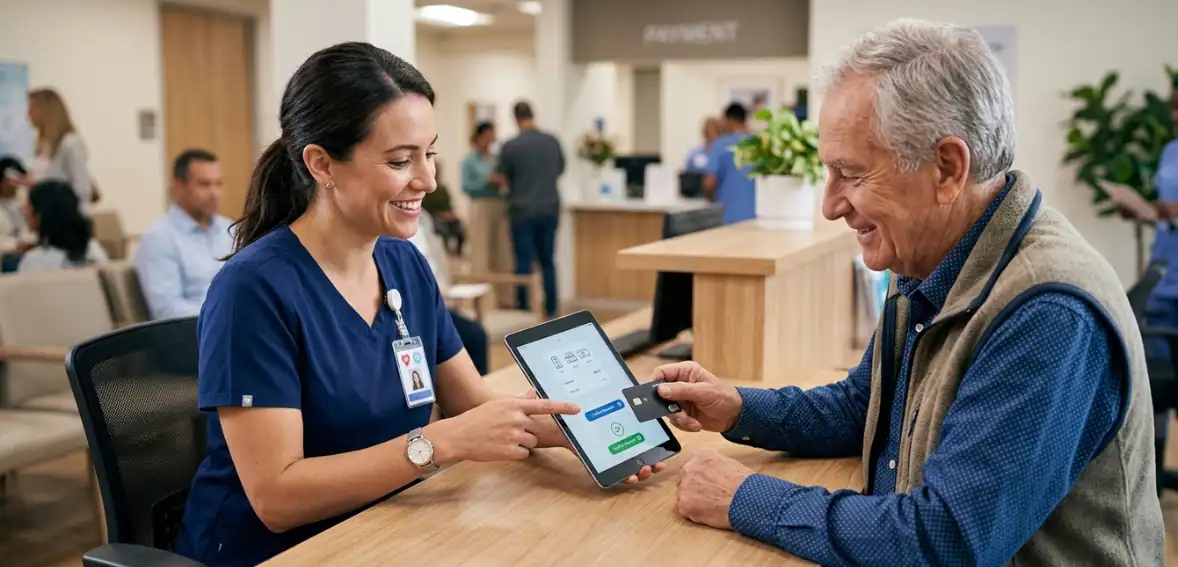
Healthcare is no longer just about diagnosis and treatment; it is also about financial interactions that patients hope will be as seamless as their healthcare services. From copays at the front desk to billing after visits, patients’ financial interactions directly influence their satisfaction as well as the success of any medical practice.
Of course, healthcare practices also operate within very strict regulatory environments, particularly when it comes to dealing with patients’ sensitive information. Payments must not only be seamless; they must also be secure and compliant. This is where the balance is created: making medical office payments seamless without compromising regulatory standards.
The challenge is definitely there; however, so is the opportunity. With the right strategy in healthcare payment processing, medical practices can enjoy seamless processing while remaining fully compliant with industry standards.
Table of Contents
Why Patient Payments Are Becoming More Complex
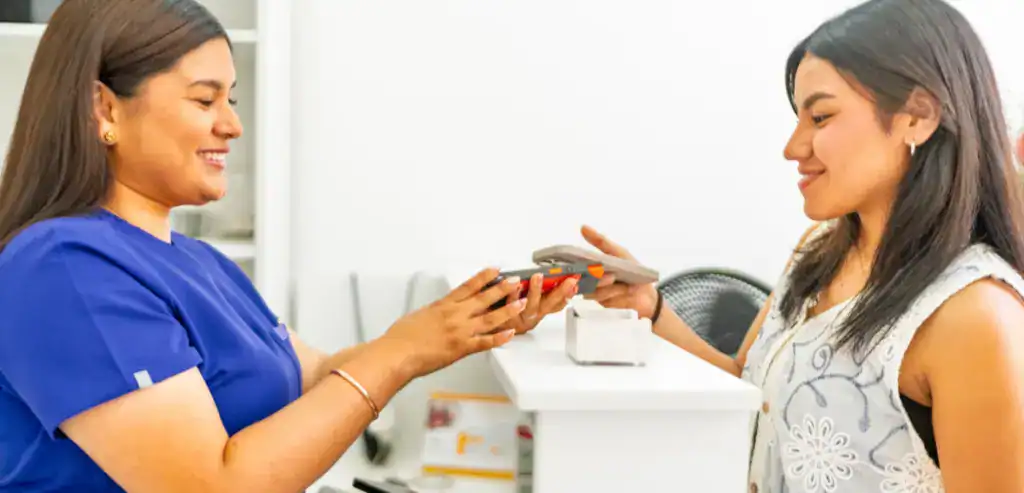
Over the past ten years, the amount patients are responsible for paying has risen considerably. The insurance plans have evolved to include higher deductibles and co-pays, which place a greater burden on the patient.
The change in the healthcare industry has led to a change in the patients’ expectations as well. The patient is no longer looking at the payment as a secondary concern but as a critical part of the process. If the payment process is inconvenient, the patient will likely experience a longer waiting period for services to begin. In fact, some patients do not pay their bills simply because the process is inconvenient.
The change in the patient’s expectations has led to a change in the healthcare industry as well. The industry is no longer a simple process, and the healthcare provider must have a streamlined payment process in order to ensure timely payments. Simplifying payments is no longer optional—it’s necessary for both patient experience and financial stability.
The Role of Healthcare Payment Processing
Healthcare payment processing is the core of how a medical practice receives its payments. It encompasses all the activities, from credit card transactions to digital payments, as well as periodic billings.
Unlike other businesses, healthcare payment processing involves partial payments, insurance, and delayed payment cycles. This calls for a system that can process all the cases without any complexities.
A good payment processing system for healthcare ensures that all the payments made are processed correctly, safely, and accurately. If implemented correctly, healthcare payment processing is not only about increasing the speed of the payment process but also about creating a workflow that can support the patients as well as the practice staff.
Making Payments Easier for Patients
The factor of convenience plays a very important role when patients are required to make timely payments. If the process is easy, patients are more likely to make timely payments. On the other hand, if the process is complex, patients are bound to face delays.
One of the most important ways to enhance the payment process for patients is by providing them with various options. Patients should be provided with the facility to make payments using cards, wallets, and bank transfers, as per their convenience.
Another important factor that can enhance the payment process for patients is clarity. Providing patients with transparent billing, invoices, and payment instructions can help build trust with them. The process of making payments easy for patients involves eliminating all barriers. The fewer barriers patients face, the more likely they are to make timely payments.
Patient Payment Portals and Their Impact
One of the most powerful tools for simplifying patient payments in the medical office setting is the patient payment portal. The patient payment portal allows patients to view balances, view invoices, and make payments online.
This is important. The patient is no longer restricted to making payments only during the doctor’s business hours. The patient can make payments anywhere, anytime. This, in itself, is one of the most powerful tools for speeding up the payment process. The patient payment portal also reduces the workload. The patient no longer has to make payments manually. The portal will do the work for them.
Ensuring Compliance with HIPAA Payment Solutions
Since handling payment transactions in healthcare is all about handling sensitive information, compliance is one key requirement for HIPAA payment solutions. HIPAA payment solutions for healthcare organizations are created to guarantee that all payment transactions comply with strict levels of security and privacy.
HIPAA payment solutions for healthcare organizations utilize various security features such as encryption and access control to protect patient information and guarantee safe storage and transmission of payment information.
Compliance is not only about avoiding fines and penalties, but it is also about trust. People need to trust that their personal and payment information is being handled responsibly. HIPAA payment solutions for healthcare organizations help medical practices guarantee that payment transactions remain safe and convenient for patients.
Reducing Delays in Medical Office Payments
Delayed payments are a common problem in the medical field. This is often due to unclear billing and/or inconvenient payment processes. In order to solve this problem, a proactive approach has to be taken. Collecting payments at the point of service is one way to solve the problem.
This helps in eliminating the need for future reminders and maximizes the revenue cycle. Another way to solve the problem is by using automated reminders. This will help in improving payments by providing reminders for payments that need to be made.
The Importance of Transparent Billing
Transparency is important in developing trust as well as ensuring timely payments. Patients will always be willing to clear their bills when they understand what they are being charged for.
Transparency in invoicing is also important. This is because it reduces confusion among patients. With clear invoicing, patients will understand what is due to them after adjusting insurance payments. Transparency is also important in communication. Patients need to understand their obligations before receiving services. When billing is transparent and clear, it reduces confusion among patients. This creates an easier billing experience.
Healthcare Merchant Services and Their Role
Healthcare merchant services offer the necessary infrastructure required to process payments in an efficient and secure manner. These services are designed to cater to the needs of healthcare practices. They allow for various modes of payment to be accommodated. This ensures that transactions are executed in an efficient manner.
Selecting an effective merchant service provider is critical. This is because it not only affects how payments are processed but also how effectively it integrates into existing operations.
With an effective healthcare merchant service in place, it becomes an integral part of operations. This is because it is able to provide support in terms of compliance as well as convenience.
Automation in Payment Workflows
One of the most effective ways of improving payment systems in medical practices is through automation. This helps to reduce work and maintain consistency in all transactions. For example, automated invoicing and payment reminders can be used to improve operations. This helps to reduce delays. In addition, these operations are done automatically, freeing up time for other important activities.
On the other hand, automation helps to maintain consistency and reduce errors. This ensures that all transactions are properly recorded. By incorporating automation into medical practice payment systems, a better system can be developed.
Balancing Convenience and Security
However, the ease of payment should never be done at the expense of security. This is important in the context of medical practices. The balance between ease of use and security can be attained through the development of systems that have both ease of use and security. This is done through the development of systems with appropriate login mechanisms, encryption, and other security protocols.
The patients stand to benefit from the balance between ease of use and security. This is because the patients can make their payments with ease without compromising the security of the information. The balance between ease of use and security is also important to the providers.
Improving Patient Communication Around Payments
Communication is also important in ensuring timely payments. Patients need to be informed about their responsibilities and the payment options available to them. This helps in avoiding any confusion and enables them to plan. It also helps in making the payment process more predictable by setting expectations.
The importance of communication in medical practices cannot be emphasized enough. It helps in improving the payment process by making it more transparent. This can be done by improving communication.
The Role of Technology in Modern Healthcare Payments
Technology is continuing to influence how payments are processed in the field of healthcare. For instance, there are digital portals and mobile payment systems that are making payments quicker and easier for all parties involved. Technology is making payments more efficient through integration with existing systems. This is making processes quicker and easier for all parties involved.
Using technology is making medical practices competitive. For instance, technology is enabling medical practices to ensure that payments are processed efficiently and in compliance with regulations. By embracing technology, medical practices can design a payment system that is efficient and effective in satisfying patients.
Long-Term Benefits of Optimized Payment Systems
Improving payment processing has many benefits for medical practices in the long run. First, faster payments result in better cash flow for medical practices. This helps reduce uncertainty and leads to better financial conditions for the practice. Second, better payment processing minimizes administrative burdens for medical practices. This helps improve the productivity of employees within the medical practice.
For patients, improving payment processing can result in better satisfaction and trust for medical practices. This can lead to better relationships and retention for medical practices.
Thus, medical practices can improve their conditions and create a better system for the future through better payment processing.
Offering Flexible Payment Plans to Patients
Not all patients can pay the entire amount of the medical bill at once, especially considering the increasing healthcare expenses. By offering flexible payment plans, patients can pay the bills in installments.
This method relieves the patients of the burden of paying the entire amount at once, which can help the patients make timely payments. Patients who feel the practice understands the situation will be more likely to comply with the requirements.
From the practice’s viewpoint, flexible payment plans can help create a steady cash flow for the practice. Rather than the patients missing payments, the practice can benefit from a steady flow of payments. By offering flexible payment plans, medical practices can help balance the compassionate approach with the practice’s financial situation while increasing patient satisfaction.
Contactless and Digital Payment Adoption
This is because contactless and digital payment methods have become more prevalent in different industries. In the medical field, patients also need to be provided with the option to make payments using digital payment methods.
Providing patients with the option to make payments using digital payment methods will make the payment process more efficient. This is because patients will be able to make payments using tap-to-pay cards and online payment methods.
The advantages of using digital payment methods for medical practices are that they will be more efficient. This is because errors will be reduced and payments will be processed faster. This will enable medical practices to keep up with the expectations of patients.
Integration with Electronic Health Records (EHR)
Integrating payment systems and Electronic Health Records (EHRs) can result in a more connected and efficient workflow for medical practices. By linking payment systems and billing information to patient records, all information is readily available to staff members in one location. This not only helps to eliminate confusion and errors in billing and data entry but also ensures that patient balances are constantly up to date and available for patient interactions.
For patients, this integration results in improved communication and billing processes. For providers, this integration results in improved practice operations and efficiency. Medical practices can utilize this integration to link payment systems and EHRs to effectively streamline the process for patient care.
Reducing Billing Errors Through Standardization
One of the most common reasons for late payment in the healthcare sector is billing errors. Inaccurate or confusing billing may confuse the patient and create room for conflict.
Standardization of billing procedures is an effective measure to minimize such problems. A standardized billing procedure ensures accurate and easy-to-understand bills for all patients.
In addition, standardization also increases the efficiency of the organization.
A standardized procedure eliminates the need for repeated corrections and reminders.
When patients are presented with accurate and easy-to-understand bills, they are more likely to make timely payments. Thus, by focusing on the standardization of billing procedures, the efficiency of the payment process will increase.
Conclusion
In fact, facilitating patient payments and ensuring compliance at the same time is not a contradictory requirement but one that needs to be met for modern medical practices. By using efficient payment systems for healthcare, facilitating patient payment, and ensuring HIPAA payment systems are in place, it is possible to provide a smooth payment experience for patients.
Making patient payments smooth and easy is one way to enhance patient satisfaction and practice profitability at the same time. However, ensuring compliance is also important to guarantee patient data security and HIPAA requirements. When a medical practice takes this approach, it is possible to develop a smooth payment system that is not only efficient but also trustworthy for patients and providers alike.
FAQs
Why do medical practices face difficulties with patient payments?
Slow and complex collections are frequently caused by complicated billing, insurance coordination, and delayed invoicing.
How might payments be made easier for medical practices?
By providing clear invoices, online portals, and a variety of payment methods, including cards, ACH, and mobile payments.
What part do patient payments play in compliance?
To safeguard patient information and guarantee safe transactions, practices must abide by laws like HIPAA and PCI standards.
Can payment collection be enhanced by automation?
Yes, regular payments, automated billing, and reminders all contribute to better consistency and fewer delays.
What are the advantages for both patients and providers of simpler payments?
They help practices maintain consistent cash flow while remaining compliant and well-organized. They also lessen confusion and increase customer satisfaction.